
Smart Options for Automotive Tubing
Not since the 19th century, with the arrival of the first motor vehicles, including electric, have we seen such upheavals in the automotive industry. Consequently, new uses for plastic tubes are showing up under the hood. The changes are coming at a steady pace. Are you ready to respond to new demands coming from tier-one suppliers?
At Davis-Standard, we recognize the mounting pressure for responsible fuel consumption, environmentally-friendly energy sources, lighter vehicles, more technology and higher safety levels. International standards and norms are trying to keep up, which allows smart players to fill the void. The result is a growing range of tube constructions, specific to markets and automobile manufacturers. Emission standards require the use of low-permeation fuel tubes while electric vehicles depend on cooling tubes to keep batteries operating at optimal temperatures. These are just a few examples.
Maillefer, a Davis-Standard company, has made tremendous advances related to multi-layer tubing for automotive applications. One of the best examples is Maillefer’s multi-layer tubing production line, which provides the flexibility needed to produce automotive tubes in demand today and in the future. At the heart of this technology is the company’s latest ECH crosshead connecting an extruder group of five or six extruders. This crosshead has the capacity to extrude smooth and corrugated tubes up to six layers while giving processors the option of swapping layer positions to address existing standards regardless of region. Mathematically, more than 150 combinations are possible with the five-layer head, while many more are possible with the six-layer version.
This crosshead also allows operators to prepare for the next product run by optimizing set-up and clean-up operations at the head. The head’s indexing features allow assignment of layer positions with a simple twist. It also makes it possible to adjust the number of layers to be extruded by employing thicker distributors or by combining extruder flows. The head’s improved design allows for the easy removal of parts, which is well appreciated during cleaning operations. The ease at which a product change is made may define your ability to capture new market opportunities. Because as we all know, having options can play to your advantage!
If you’re interested in finding out more about the Maillefer’s automotive extrusion cell, visit www.maillefer.net. Or e-mail marketing at marketing@davis-standard.com.
Photo credit: Maillefer, Extrusion Cell for Manufacturing Six-layer Automotive Fuel & Vapor Return Tubes
Cheers,
The D-S Connect Blog team
Chill Roll Cleaning – Part Two

Part two of the chill roll series provides tips for care of rubber covered rolls as well as grinding and maintenance.
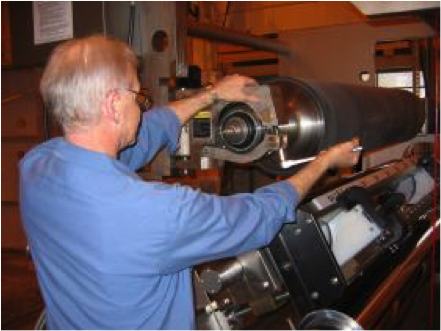
Care Of Rubber Covered Rolls
For rubber-covered rolls, special care is needed. Following are suggestions that will help protect the surface while enabling you to perform necessary maintenance.
- Support rolls on their journals with covers free of all contact with other objects. The rubber will distort if you lay rolls on their surface. The “Flat Spot” or “Compression Set” caused by contact with another surface can create innumerable problems in machine operation. Unless corrected by grinding, these rolls will not operate properly.
- When the machine is down, open all nips so they will be free from contact with other surfaces. If your machine includes nips that close due to gravity, block these nips in their open position. Pilot-operated check valves are normally used in these cases to hold the nips open for an extended period of time.
- To prevent oxidation, cracking or checking, keep rubber rolls away from steam pipes, boilers, dryers, and radiated sunlight.
- When storing, wrap rolls in paper, pack in wooden boxes (preferably cases designed for rolls), and place in a cool, dark place. Rubber-covered rolls stored for long periods of time under certain conditions will show surface cracking or oxidation. Generally, this is only a surface condition and can be corrected with a light grind.
- To correct checking or cracking of rolls caused by long periods of storage, re-grind or re-surface before using.
- Re-grind rubber-covered rolls periodically to maintain maximum economy and quality.
- When removing a roll from a machine, use (a) rope slings supported on the journals with wood blocks taking up the tension, or (b) wide belt slings balanced around the roll surface at the center.
- Keep the roll surface free of machine oil and grease. If necessary, clean the surface with solvents for your particular roll covering.
- Pack rolls safely and securely for shipment, whether for re-grinding or re-covering.
- Inspect stored rolls periodically and rotate when possible.
Grinding And Maintenance Tips
- Grinding should be done on a regularly scheduled basis.
- To avoid the danger of damaging roll covers or removing too much covering, allow sufficient time for the grinding operation, taking light cuts on softer rolls.
- If grinders are equipped with dust collectors, dry grind the roll; if not, use wet grind.
- Select a grinding wheel of proper grit size and hardness; maintain proper tension on the wheel belt drive; and keep the carriage drive well-lubricated during grindings. We will be happy to recommend proper grinding wheels upon request.
- During the grinding operation, the wheel should be properly dressed by using a black diamond, diamond tip or star dresser.
- Remove enough of the covering to eliminate all cracks, corrugating and checking.
It’s also important to note the cause of reduced roll life or inefficient operation. These include:
- Incorrect crown, density or thickness
- Failure to grind the roll periodically
- Failure to grind the cover below surface checks, corrugations or cracked areas
- Excessive or uneven operating pressure
- Incorrect roll body design
- Roll out of alignment, gears or other equipment in faulty condition
- Failure to release pressure and lift the roll from the nipped position when not in operation
- Roll covering not compounded for the specific position and condition
- Incorrect use of solvents, foam killers, oils and other chemicals that may damage the roll covering
- Continuing to operate a damaged roll
- Allowing the roll to run out of balance
If you have any questions relating to this blog post, please comment below.
If you wish to inquire about our products and service, please email marketing@davis-standard.com.
Cheers,
The D-S Connect Blog Team
Chill Roll Cleaning – Part One

Consistent roll maintenance is a necessary aspect of maximizing cast film and extrusion coating equipment performance and longevity. In this two-part series blog, we will discuss the necessary step-by-step instructions for cleaning chill rolls to remove iron oxides and other build-up.
Safety Note: Always follow the safety recommendations provided by manufacturers when using any of the products/procedures for cleaning chill rolls.
Chill Roll Cleaning
We suggest utilizing the following every six months or until a cleaning cycle schedule is established. The chemical used in the process below is Oakite® 32, a Chemetall BASF product, but there are others available based on preference.
First, make sure you have the right equipment. We recommend:
-
-
- A pump – Low-capacity (30 to 40 GPM), expendable or acid-resistant; this includes immersible sump-type pumps
- Open tank – 150 to 200-gallon capacity
- Flexible hose – 1 to 1 ½ inches (25 to 38mm) internal diameter
- Fixture to hold roll during cleaning – Rolls should be properly supported to prevent accidental movement during the cleaning process. Damage to the roll and/or personal injury may result if the roll were to shift/move during the process.
- Oakite 32 liquid – Enough to maintain 25 percent solution by volume starting with 50-gallon solution
- Titration Kit – Use Gardotest Procedure 96 for the concentration of Oakite 32. Use Gardotest Procedure 66 for neutralization of Oakite 32 using Enprox 714. To receive the procedure, call 1-800 526-4473 ext. 2355 for technical assistance.
- Enprox 714 liquid – Or, equivalent alkaline to neutralize Oakite 32
-
Set-up Procedure
1 Place the fixture for holding the chill roll as near to the tank as possible (5 to 8 feet).
2 Attach the supply rubber hose from the discharge of the sump pump to roll journals using suitable reducers, unions, etc. Do not pass the cleaning solution through the rotary union.
3 Attach the return rubber hose from the discharge hose to the other journal and to the tank. Discharge of hose must be below the liquid level of the tank.
Cleaning Procedure Using Oakite
1 Fill the open tank with approximately 50 gallons of fresh water with the sump running to fill the hoses and circulate it through the roll.
2 Add sufficient Oakite 32 to the tank for a 25 percent-by-volume solution (approximately one 20 gallon carboy container of acid).
3 Continually circulate this solution for 20 minutes. Titrate the solution sample from the tank with a titrating kit supplied by Chemetall BASF. To receive the procedure, call 1-800-526-4473 ext. 2355 for technical assistance.
4 When the solution concentration has NOT changed, as indicated by titration, the cleaning is complete. Allow the solution circulate another 30 to 45 minutes.
5 Drain the system as much as possible using the pump by moving the supply hose from the roll journal and draining the system into a drum or other disposal container. Follow the manufacturer’s directions for proper disposal of the solution.
6 Add sufficient fresh water to the tank totaling approximately 50 gallons in the complete system. Add sufficient Enprox 714 as indicated by Gardotest Procedure 66, or equivalent alkaline to fresh water in the tank. Recirculate this solution until litmus paper indicates the solution is neutral or slightly alkaline; pH paper may also be used.
NOTE: The return hose must be lifted above the tank liquid level and the fluid tested on the litmus or pH paper as it exits the return hose.
7 Drain the alkaline solution in the recirculating system using the procedure noted in step #5. Then, flush the system with fresh water and drain. It is advisable to add a rust inhibitor to the flushing solution at the end of the cleaning cycle.
Instructions for Titrating Solutions of Oakite 32
Materials Needed
-
-
- Test Kit for Oakite 32: Material #45218539
- Gardotest Indicator 155, Bromophenol Blue 60 ml #50560514
- Gardotest Solution 23, 0.5N Sodium Hydroxide 250 ml #50560578
- Sample Bottle marked at 10-25-50-100 ml mark 1 ea #45218458
- Pipette, Direct Read, 0 – 5 ml, 1ea #45218454 Dropper,
- Glass, 0 – 5 ml 1 #45218454
-
Procedure
1 Using either the graduation marks on the 120 ml sample bottle or the appropriate dropper, measure out the 2 ml sample volume of Oakite 32 solution to be titrated. Add sufficient water to fill the 120 ml sample bottle about half full. Water can be DI, RO or distilled.
2 Add 10-15 drops of Gardotest Indicator 155 and swirl to mix. The color will be yellow.
3 Fill the calibrated direct read pipette exactly to the zero-mark with Gardotest Solution 23, and add this to the mixture in the sample bottle, a few drops at a time with swirling between the additions, until the color changes from yellow to blue.
4 Record the number of mls used. Call this Titration T. This completes the analysis
5 If a precipitate forms, allow it to settle and observe the color of the supernatant liquid to make sure it is blue. If still yellow, add more Gardotest Solution 23 to a blue endpoint.
6 Calculation: Mls of Gardotest Solution 23 used X 2.5 = % by volume Oakite 32
EXAMPLE: If 100 gallons of Oakite 32 solution tests at 5 percent and recommended concentration is 10 percent, add 5.5 gallons of Oakite 32. If the sample of Oakite 32 being tested contains a large amount of iron, the color at the end of the titration may be green or blue-green instead of pure blue.
Our next blog will discuss tips for care of rubber-covered rolls, including grinding. If you have any questions relating to this blog post, please comment below.
If you wish to inquire about our products and service, please contact us by emailing marketing@davis-standard.com.
Cheers,
The D-S Connect Blog Team
When Traditional Feedscrew Removal Fails…

As a follow-up to our previous blog entitled “The 911 for Feedscrew Removal,” there are situations when typical feedscrew removal procedures fail. Thus, extra work is involved. Due to the challenging nature of these situations, do not hesitate to contact us with questions if you have to employ any of the alternative procedures below. We’d be happy to walk you through the steps or provide on-site assistance.
Alternative #1
Oxidation or corrosion can cause the screw to be jammed in the taper. When this happens, we suggest using a steel rod (not a pipe) slightly smaller than the hole through the thrust sleeve. Ensure the rod long enough so that it protrudes 18 inches (45cm) from the thrust sleeve. Once the rod is inserted into the thrust sleeve, cautiously hit the rod with a sledgehammer. If the rod does not move after a few tries, rotate the feedscrew slightly by turning the input sheave by hand. Repeat the hammering. Once the screw is knocked free, repeat the normal procedure for feedscrew removal.
Alternative #2
In some cases, the oxidation is so severe that using the method above will not loosen the feedscrew. In this case, penetrating oil must be applied. To do so, mask off the bottom half of the hole found at the rear of the thrust shaft. Pour penetrating oil over the top of the masking until it is ¼-inch (6mm) deep. Then, mask off the entire hole. With oil in the bore, rotate the shaft by turning the input shaft by hand. If there is a clear passage, the oil will find it and run out the shank of the feedscrew. Allow the oil to set overnight.
Make a block of wood 4 x 4 x 36 inches (10 x 10 x 91cm). Place the block of wood against the side of the feedscrew behind the feed section where the shank is visible. Give the block of wood a few sharp blows with a sledgehammer. Rotate the feedscrew and repeat the hammering until it loosens. Then perform alternate procedure #1.
Alternative #3
If the first two procedures to do not work, there is a third alternative. However, try the above procedures repeatedly before engaging this option. With this procedure, there is a good chance the barrel and feedscrew will be ruined.
Loosen the bolts on the barrel support casing on the front of the machine. Using a pry bar, lift the casing up about ¼ to 3/8-inches (6 to 9.5mm). While it is lifted, rotate the feedscrew by turning the reducer input shaft by hand. This tends to bend the feedscrew, causing strain on the taper. It may help to strike the feedscrew at a side angle while it is bent. If this fails to loosen the screw, it will probably be necessary to disassemble the machine and remove the feedscrew from the feed end of the barrel. If this fails, the entire feedscrew/barrel unit must be put in a large hydraulic press where it may require up to 100 tons to remove the feedscrew.
Hopefully, you will never need to use these alternative procedures. For additional questions about this or any other feedscrew maintenance topic, please e-mail marketing@davis-standard.com.
Cheers,
D-S Connect Blog Team
The “911” for Feedscrew Removal

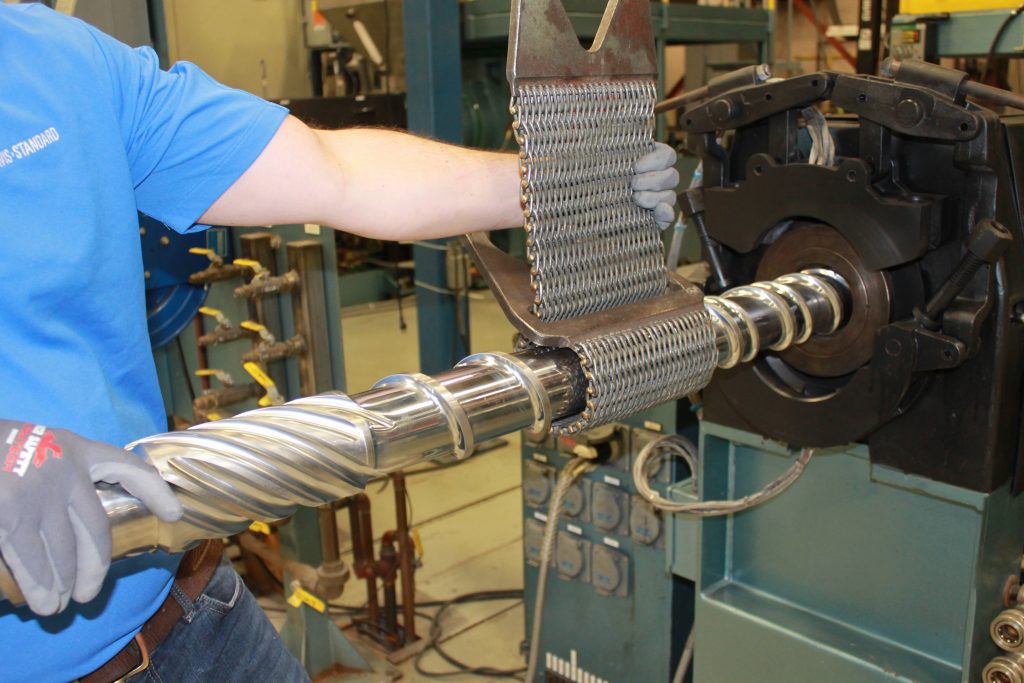
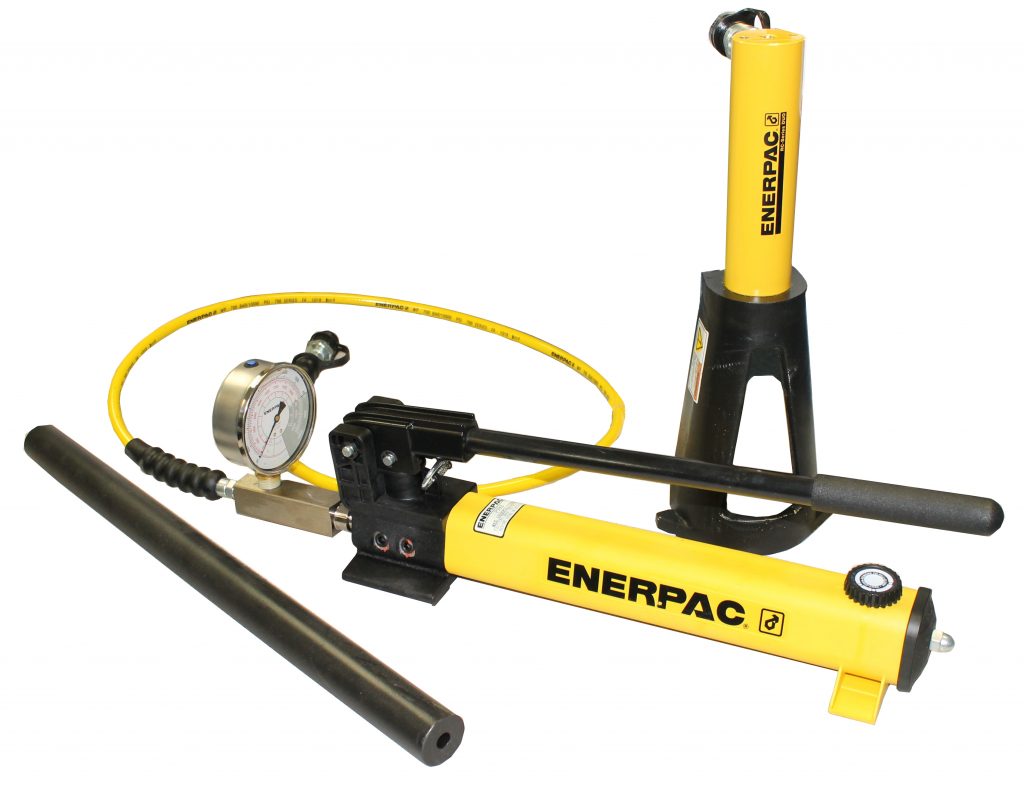
Your feedscrew is stuck…now what? Never fear! First thing’s first, follow the instructions in your extruder manual. Secondly, we recommend using a feedscrew jack to safely aid in this process. This jack employs a long, grooved bar between two hydraulic cylinders actuated by a lever or via push-button operation. A latch engages and pushes the bar forward the distance between the grooves. The latch is then retracted until it picks up the next groove (the above picture is a different model that uses a single-cylinder; however, the procedure is the same).
To give you an idea of what to expect, here are 10-steps applicable to feedscrew removal for most Davis-Standard extruders using a feedscrew jack (please remember the machine must be at operating temperatures for the below procedure).
(1) Shut down the extruder. Shut off water and remove the rotary union and cooling pipe assemblies from the feedscrew. Be sure any pressure is relieved.
(2) Loosen the head clamp and swing or lift the head free of the barrel flange.
(3) Remove the breaker plate, screen pack, etc.
(4) Insert a push rod in the bore of the thrust shaft and against the feedscrew end.
(5) Place the jack bracket in the groove of the thrust shaft and above the two supporting lugs on the rear face of the bearing retainer. These lugs prevent rotation of the jack bracket.
(6) Using the pump handle, increase the jack pressure. This puts pressure on the feedscrew through the pushrod and forces the feedscrew forward and out of the keyways.
(7) Turn the knob to release pressure in the pump. Insert additional spacers between the piston rod of the jack and the pushrod to get more sliding movement of the feedscrew.
(8) Carefully withdraw the feedscrew from the barrel. Using a wire brush, clean the flights, channels, and mixing pins or grooves as the feedscrew is being withdrawn. Make certain not to drop the feedscrew as the shoulder of the feedscrew clears the barrel.
(9) Remove spacers, jack assembly, and push rod from the extruder. The pushrod may be pushed through the delivery end of the barrel.
(10) Place the feedscrew on a wooden bench or V-blocks and thoroughly clean and inspect. Refer to the instruction manual for details.
When installing or removing the feedscrew, be careful not to let the feedscrew drop as the shank diameter changes. This will nick or damage the breaker plate recess, and typically causes irreparable damage. Protect the sealing face by machining a simple ring and inserting that ring into the recess before pulling the screw. Make the ring 0.01 inch (0.25mm) greater than the nominal barrel inside diameter, approximately 0.005 inch (0.13mm) less than the breaker plate recess inside diameter and 1.5 times the thickness of the breaker plate.
In the next blog, we will post about four alternative feedscrew removal procedures used in unique situations.
For additional questions about this or any other feedscrew maintenance topic, please contact marketing@davis-standard.com.
Cheers,
The D-S Connect Blog team
SMART Solutions = Better Processing

The digital transformation occurring in the plastics industry is opening new doors to efficiency opportunities. Evidence of SMART technology for extrusion and converting processes can already be seen in control options, machine designs and productivity improvements on the factory floor. Over the next several years, expect this trend to accelerate as processors look to harness cost-savings while maintaining quality and competitiveness.
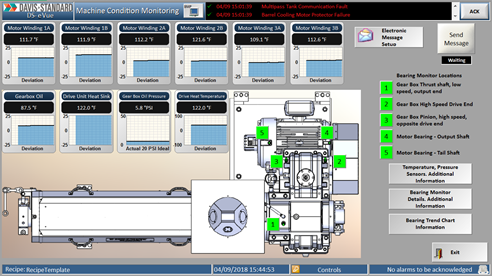
A recent example of how we’re addressing this at Davis-Standard is the DS Activ-Check system for continuous extruder monitoring. This enables processors to take advantage of real-time preventative maintenance by providing early notification of potential extruder failures. Machine operators are alerted to issues before they happen, preventing unnecessary downtime while also collecting valuable operational data. Parameters monitored include the extruder reducer, lubrication system, motor characteristics, the drive power unit, barrel heating and cooling. The best part? Notifications can be received via e-mail or text, and continuous monitoring of machine status is available on smart devices and remote PCs.

Not only does this provide much-needed information for processors to plan around scheduled maintenance activities, but it serves as a valuable tool in improving overall line performance. Having the capability to monitor extrusion line variables such as mechanical and electrical system conditions is essential to bring products to market faster AND minimize unplanned downtime. Customers can also address a pending condition to avoid a more serious issue down the line.
As it is often said, knowledge is power! The knowledge gained through machinery innovation and the potential of IIoT creates SMART solutions that will propel our industry in the years ahead. We look forward to partnering with you on the journey.
For additional questions, please contact marketing@davis-standard.com.
Cheers,
The D-S Connect Blog team
Keeping Rolls in Check!

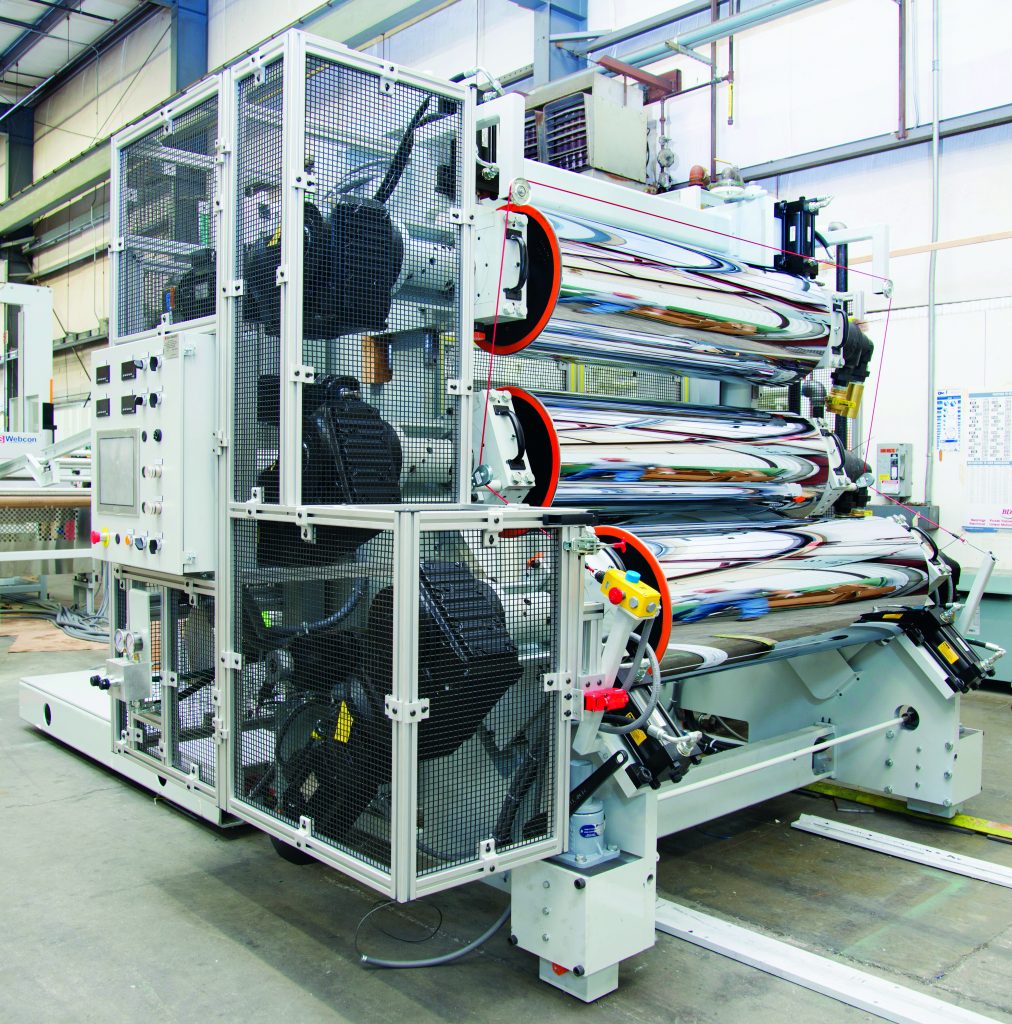
When is the last time you checked the roll surfaces on your roll stand? Periodic roll maintenance is essential for optimal sheet processing and to get the most out of your investment.
Here are 10 tips for keeping your heat transfer and cooling rolls in excellent working order.
- If a roll becomes wrapped with plastic, remove the plastic ASAP. The plastic shrinks as it cools, potentially causing damage to the roll surface. This can result in the sheet taking on a repeated striped appearance if damage occurs.
- Regularly inspect roll surfaces for nicks, dents or coating that may be chipping.
- Inspect rotary unions to ensure they are free turning and free of leaks. Many rotary unions have an internal replacement in a cartridge style. If you’re not sure what you have, we can help you.
- Maintain bearings by greasing them on a regular basis and watching for wear. Follow the lubrication instructions in your machine manual.
- Properly set bearings for operation. Check the fixed bearing on the drive side and the expansion (or free) bearing on the control side. The expansion bearing is especially important as it allows for lateral movement as the roll heats up. This prevents bearing overload and premature bearing failure.
- Backflush the roll to minimize internal mineral build-up. Follow the instructions in your machine manual for internal roll cleaning.
- When storing rolls, cover with padded covers to protect the surface.
- Periodically rotate the rolls while storing.
- Keep a spare roll on hand with bearings and rotary unions. This will minimize downtime when having to change out a roll.
- Make sure dead-stops are recalibrated for any process change affecting roll temperature operation from the original install. Or, for roll exchange where the diameter may have changed due to refurbishment or other factors.
For further questions about this or any other sheet system maintenance topic, please contact marketing@davis-standard.com.
Cheers,
The D-S Connect Blog team
Keeping the Extruder “Engine” Primed
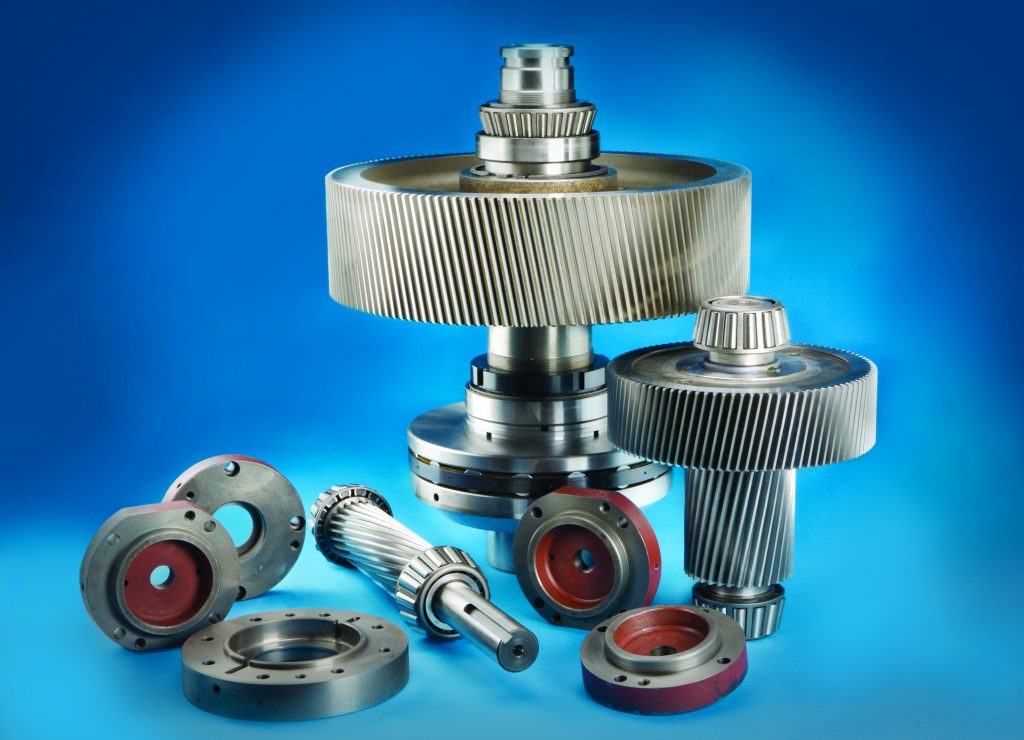
At Davis-Standard, we like to refer to the gearcase as the engine of the extruder. Just as it’s important to keep the engine of your car well-maintained, keeping the gearcase in prime condition can significantly impact your bottom line. Energy consumption, processing efficiency, product quality and outputs are all influenced by gearcase operation. To ensure longevity and performance, we recommend regular maintenance and inspections. Here are five tips to keep the engine of your extruder running strong.
- Routine inspection – Visually inspect the gearcase on a regular basis, including listening for new noises.
- Oil and filter changes – This should be done every 4,000 machine hours with the same oil brand and grade.
- Monitor bearings – Look for increased bronze and steel particles and cast-iron powder. Build-up indicates it’s time for a replacement.
- Monitor temperature – The operating temperature of the sump oil should never exceed 71°C (160°F).
- Be proactive – The cost to rebuild before failure is less expensive than after failure.
If you think you may need a retrofit or rebuild, we can assist you with a thorough inspection. We quote standard parts and labor on all repairs and discuss recommendations with the customer prior to beginning work. This includes disassembly and inspection of all gears, pinion shafts, bores, feed section and bushing. In a typically retrofit, we replace, reassemble and reset all bearings, and install a new oil system if needed. The gearcase is then tested and repainted. Gearcases are typically shipped to our facility in Pawcatuck, Conn., and work is completed within a week. Gearcases are shipped back to the customer with a full factory warranty. On-site installation is optional.
If you would like more information on parts and upgrades, please visit our website page. Also, if you have additional questions or would like to learn more about retrofitting or rebuilding your gearcase, please contact marketing@davis-standard.com.
Cheers,
The D-S Connect Blog team
Pros and Cons of Inline Slitting
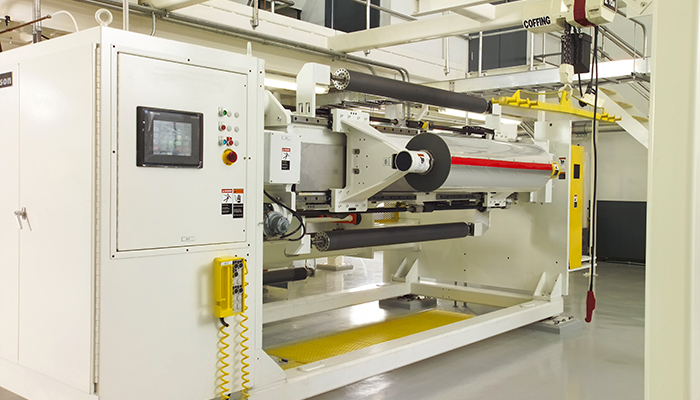
Producing high-quality, shippable rolls directly off your film line presents an ideal situation. Increased productivity, lower manufacturing costs, decreased scrap and shortened production cycles all add up to savings and profits. It is estimated that eliminating off-line slitting and rewinding can save between $0.05 and $0.10 per pound in production costs.
Extensible films that are wound to smaller diameters such a stretch wrap and food wrap films have traditionally been slit inline. However, as the widths and speeds of these lines have increased, the consistency of scrapless roll changing, finished roll removal, and the recoring process has placed unique demands on inline slitting processes and equipment. Taking advantage of the Pros (Productivity and Profitability) of inline slitting without sacrificing quality requires the right mix of equipment and the following considerations:
Process consistency – The process quality of the material being produced must be consistent. Cutting off-quality production out of 12 slit rolls instead of one parent roll can significantly impact production costs. Today’s automated process control systems substantially reduce off-quality process problems.
Efficient changeover time – Today’s automated slitter positioning systems and automated roll and recoring systems permit fast and efficient set-width changes, roll changes and recoring. Note: Even with these automated systems, long production runs of products and widths are required for the benefits to be realized.
Ability to spread and wind shippable quality rolls – The winder must have a properly designed slit-web spreading system and the ability to use all three of the tension/nip/torque winding principles needed for producing quality wound rolls. (See the previous blog on making better film rolls.) The ability to wind on differential shafts may be required for materials with high cross machine thickness variations that need to be wound to larger diameters.
High-quality, high-speed transfers and good starts – New transfer systems produce straight-line cuts and transfer the slit web directly onto the new core. Stationary knife transfer concepts provide 100 percent roll change consistency regardless of web width or speed of the operation. This is essential for clean web starts on new cores.
Scrap generation during roll-change operation – Quality rolls require that first and last wraps are as good as those in between. Controlled tension, nip and torque must be maintained throughout the entire winding cycle, including during the roll change to make this possible.
Core size consideration – As production lines increase in width and speed, the core shaft critical speed and deflection criteria determine the minimum core ID (inside diameter) for material winding. Just by taking a single center slit, the stiffness of the roll can no longer contribute to the stiffness of the shaft. Off-line slitting and rewinding will still be required for customers that require small core sizes.
If any of these requirements are not met, the Cons for in-line slitting result in lost production on your process line, increased production cost, increased scrap and even lost customers! Be sure to consider all of the above when evaluating if inline slitting can make you a Pro in your markets.
For more information on meeting your winding requirements, contact marketing@davis-standard.com.
Cheers,
The D-S Connect Blog Team
Making Better Film Rolls, One Wind at a Time!
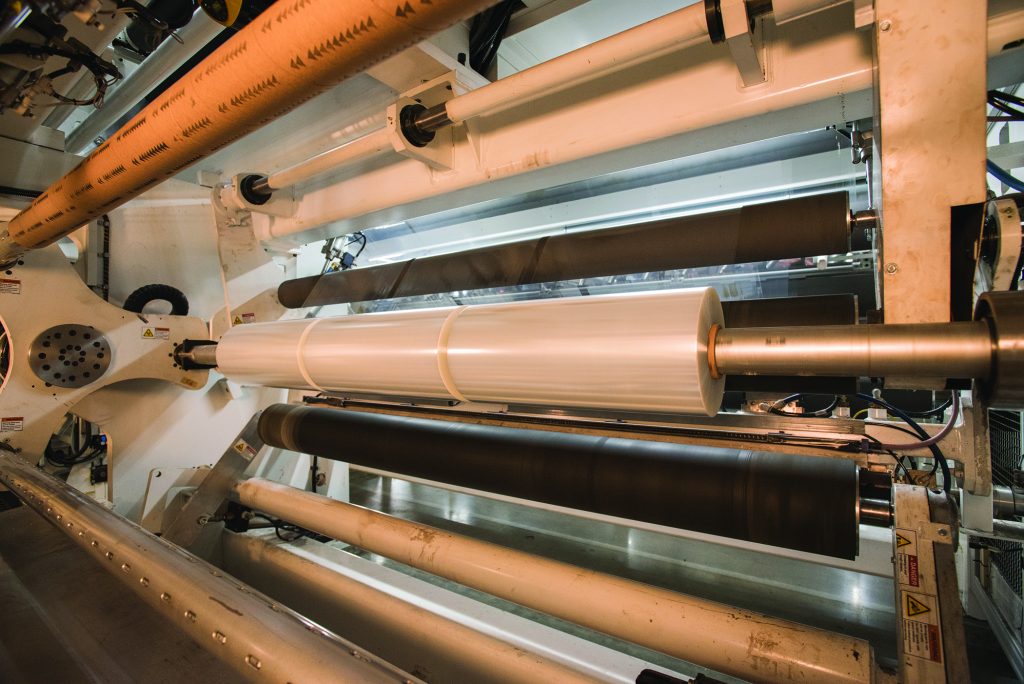
There is no way to get around it. Every flexible film producer is faced with the challenge of producing quality film rolls with imperfect films. When considering the natural variation in resins, non-uniformities of the film formation processes, coatings and printed surfaces, it’s easy to see why there is no such thing as a perfect film. These slight imperfections are integral to the nature of film itself. So what do we do? We must turn to winding as a means to ensure imperfections do not stand out in appearance and are not amplified during the process. It’s also important to take an end-product approach, ensuring films can successfully support high-quality results for the customer.
In my technical paper “Challenges in Winding Flexible Packaging Films,” I address several items that impact quality film. Following are a few examples:
Roll Hardness – Roll density, or in-wound tension, is the most important factor in determining the difference between good quality and poor quality rolls of film products. Rolls that are wound too soft will go ‘out-of-round’ while winding or while being handled or stored. Rolls that are wound too tightly can cause blocking defect problems where the sheet layers fuse or adhere together, and can exaggerate web defects.
Randomization of Cross Machine Variations – Some flexible packaging films, either by their extrusion formation process or by their coating and laminating process, have cross machine variations of thickness too severe to be wound without exaggerating these defects. To randomize cross machine variations either the web or the slitters and winder are moved back and forth relative to the web as they are being slit and wound; this is called oscillation. The rule of thumb for the maximum oscillation speeds is 25mm (1-inch) per minute per 150 mpm (500 fpm) winding speed.
Profiling Roll Hardness – As a roll of flexible packaging film material winds, in-wound tension or residual stresses builds inside the roll. If this stress becomes greater during winding, the inner wraps towards the core will be put under high compressive loads. This is what causes a defect known as ‘buckling’ of the webs in localized areas in the roll. When winding non-elastic and high slip films, the inner layers will loosen; which can cause the roll to dish while winding or telescope when unwinding. To prevent this, the rolls want to be wound tight at the core and then wound with less tightness as the roll builds in diameter. The secret to the roll hardness structure is to start with a good solid foundation and then wind with progressively less in-wound tension.
Achieving Roll Hardness – The winding tools to develop roll hardness are Web Tension, Nip Pressure from a pressure or lay-on roll or winding drum and Winding Torque from a center drive. When winding elastic films, web tension is the dominant principle used to control roll hardness. When winding inelastic films, nip is the dominant principle. Torque winding is the force induced through the center of the winding roll, which is transmitted through the web layers and tightens the inner wraps of film.
Measuring Roll Hardness – Film winding is often considered an art because the setting and programming of the Tension, Nip and Torque (TNT) varies depending on the winder, type of material, roll width and winding speed. To ensure the wound rolls are produced with consistent hardness, hardness measuring devices must be used. This enables the operator to check hardness and made adjustments to keep hardness within the acceptable range for that product.
As you can see, there are several factors that must be considered to consistently wind good rolls. The winder operator’s job is not to camouflage poor quality flexible packaging products into shippable rolls. His or her responsibility is to handle films with slight imperfections and to produce quality rolls that will run without problems and maintain quality for the downstream customer. By learning more about the process and taking the right steps, it can be done!
If you would like to receive the complete 17-page copy of this paper, please e-mail marketing@davis-standard.com.
Also, to learn more about our products and service relating to winding and unwinding, click here.
Cheers,
The D-S Connect Blog team