


Blog

let's kick the year off right! What better way than to start with maintenance. In this blog, we provide a checklist to ensure your extruder is primed for peak performance. Here are the 10 extruder components we suggest checking as part of a healthy maintenance plan.
Read More >

In the final blog post of the year, we have recapped the top five most viewed posts of 2020.
Read More >
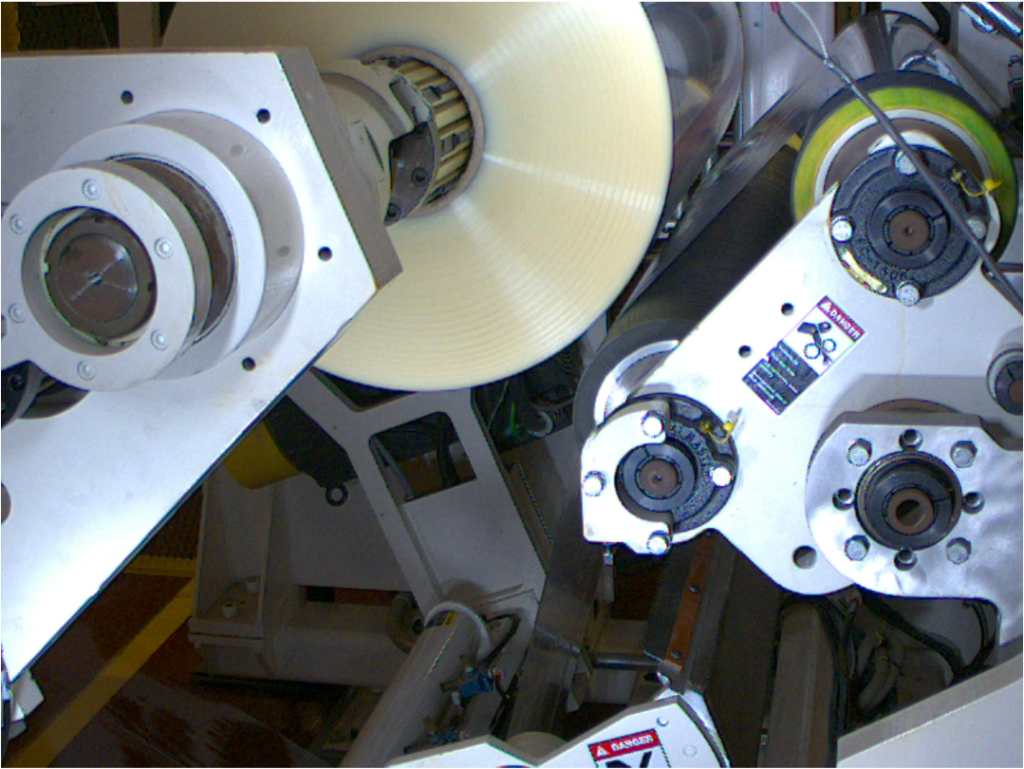
When it comes to substrate processing, consistent unwind splicing and winder transfers are paramount to quality and profitability. In this blog, we outline strategies for smarter splices and transfers.
Read More >
keep your blown film operation running as efficiently as possible with these 10 troubleshooting tips.
Read More >
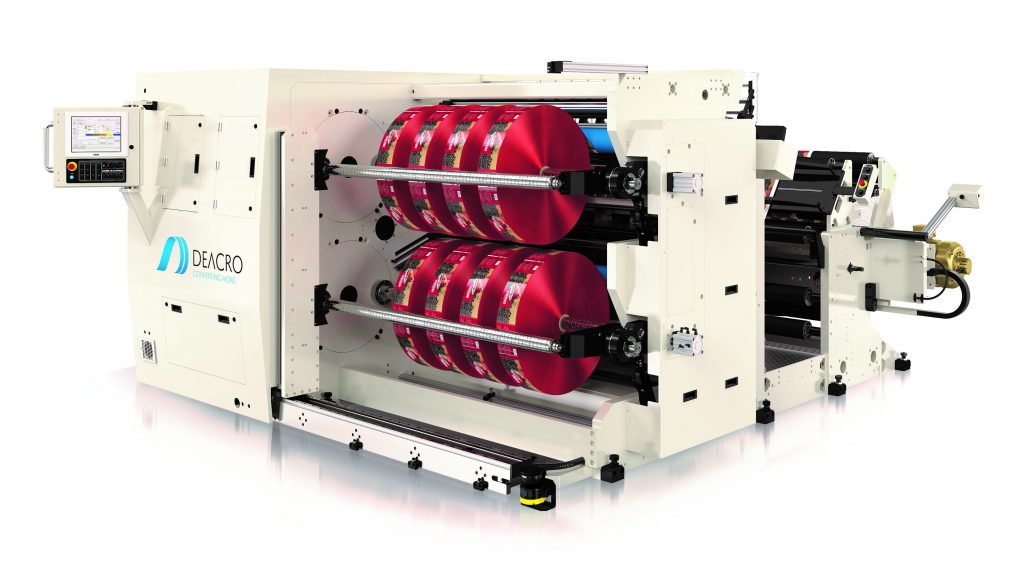
Automating your slitter rewinder process for flexible film production can yield significant advantages! In this blog, learn more about automation options that will help you capitalize on a market with an annual growth rate of 4.4 percent in an $85 to $95 billion end-use industry.
Read More >

If you are considering the feasibility of bringing paint protection film (PPF) in-house, this blog provides a basic overview of PPF structures, required equipment and TPU resin options.
Read More >
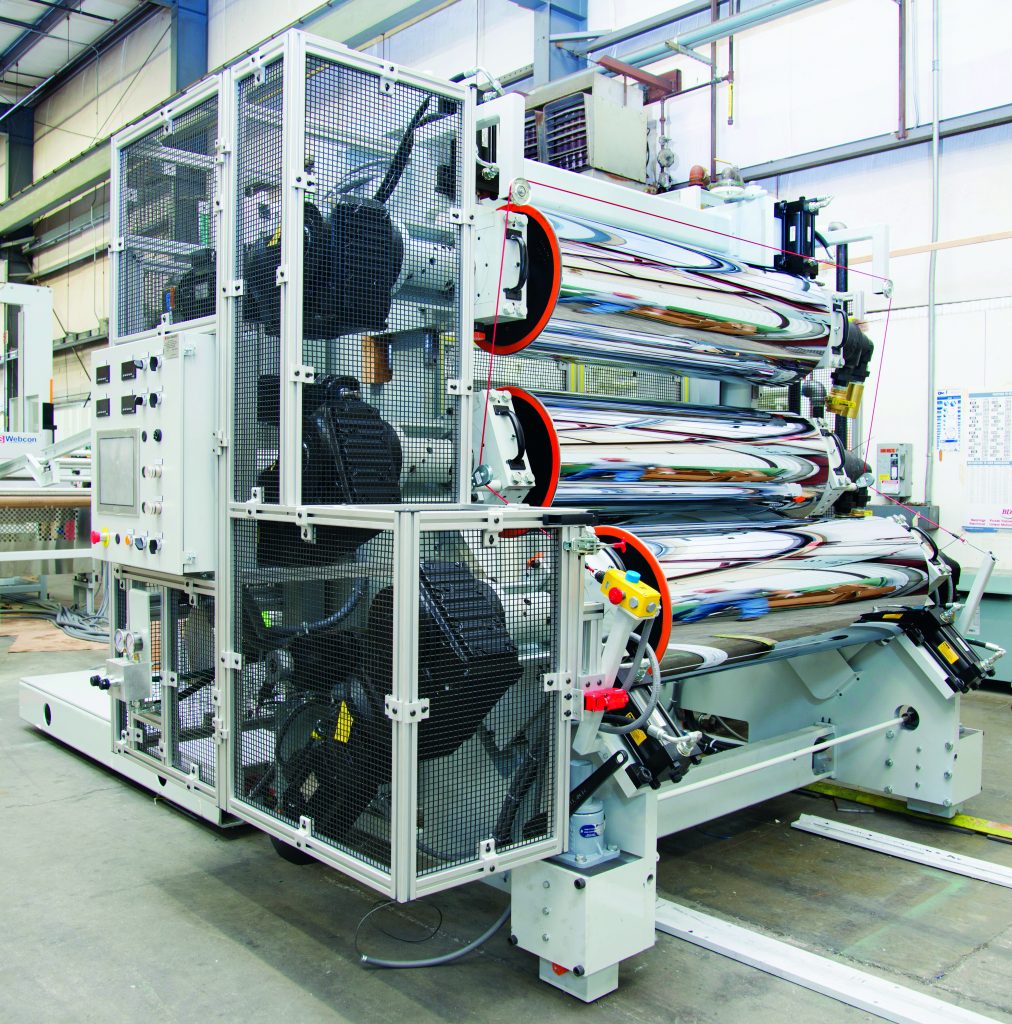
The new COVID-19 reality has placed PPE products front and center! PPE devices such as face shields are critical in protecting healthcare and other essential workers from viral airborne particulates. These shields, made from FDA approved clear plastic sheets, have not only proven their worth during the pandemic but are used in several other industrial and laboratory environments. Whether you’re already involved in the PPE marketplace or looking to expand, it’s important to evaluate sheet line capabilities. In this blog, we’ll take a look at primary machinery components and processing factors to consider. Extruder Requirements Whether using existing equipment or new equipment, the extruder needs to have sufficient torque to process the selected resin or possibly a speed increase for improved rate. For existing extruders: Evaluate motor horsepower and base gear in speed Understand available extruder torque versus required torque for resins to be processed Know the torque rating limit of the existing extruder gearbox; do not exceed the rating Belt drive extruder gearboxes can be modified by changing the sheave ratio to meet the desired torque and/or gear in speed increase A direct-coupled motor gearbox may require a gear ratio change For new equipment: Ensure capabilities are engineered for a range of resins Include extended field range motors Consider vented and plugged extruder barrels for greater flexibility Choose a flexible screw design for multiple materials as needed or optimized to fit your requirements Melt Pumps Since most sheet processes use a combination of regrind and virgin blends with variable bulk density, we recommend using a melt pump. Melt pumps reduce the output pressure variability to the downstream feedblock and die Improves machine direction thickness control Supports die performance for transverse thickness control (stable flow-thru die manifold) Offers melt stream bead stability in roll stand primary nip Operates around 700
Read More >
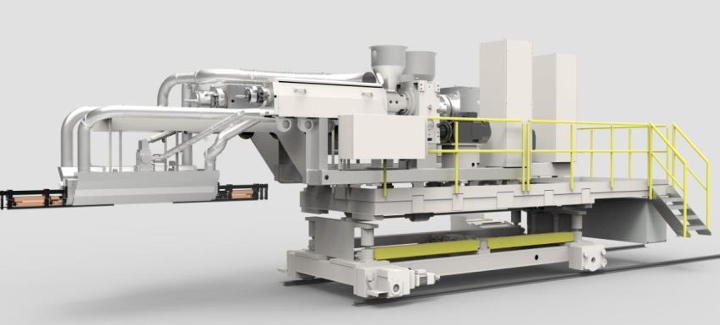
Do you ever wonder what the advantages are switching from adhesive lamination to extrusion coating? In this blog, we’ll cover benefits and the factors that influence the switch to extrusion coating as well as typical product structures.
Read More >
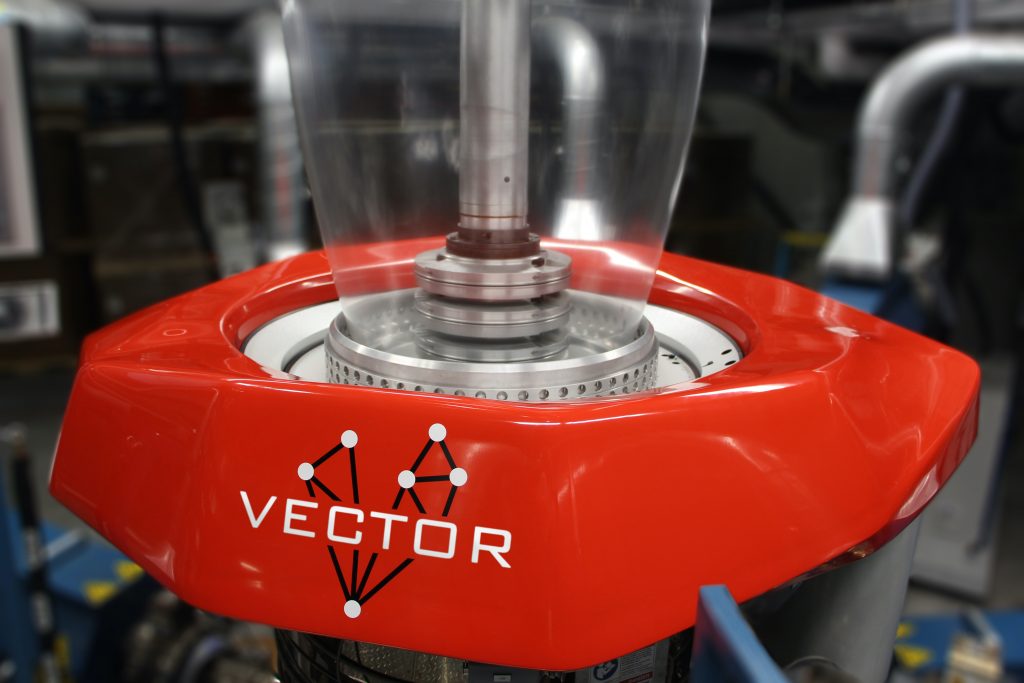
Next up in our blown film blog series, we discuss what to look for in an air ring to increase productivity and film quality.
Read More >
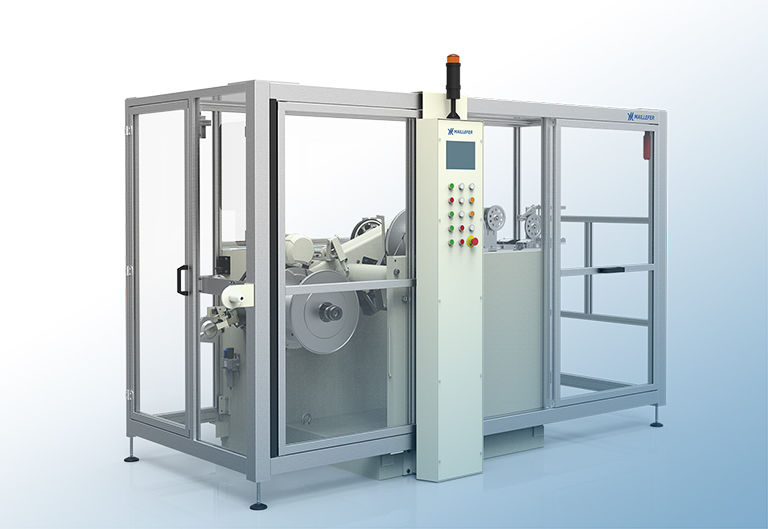
Selecting the right coiling and reeling technology for your extrusion tubing application is essential. Here are a few tips to ensure the best possible outcome for coiling and reeling your extruded tubing.
Read More >

Starting The Year Right!


I bet we can all agree we’re thankful for a new year! And now that we’re here in 2021, let’s kick the year off right! What better way than to start with maintenance. In this blog, we provide a checklist to ensure your extruder is primed for peak performance. Here are the 10 extruder components we suggest checking as part of a healthy maintenance plan. Each one of these items is recommended for quarterly maintenance unless otherwise noted.

Control Panel

  • Clean and inspect inside of the control panel. Look for burned wiring and signs of component overheating.
  • Make sure all terminal connections are tight.
  • Check that receptacles are grounded.
  • Test and monitor operating conditions. Check amp draw of three-phase motor input.
  • Check and calibrate all temperature and pressure controllers.
  • Check all ground connections and verify continuity (yearly).
  • Check and verify drive potentiometer speed, as equipped (yearly).

Feedscrew and Barrel

  • Clean and inspect pressure gauge transducer.
  • Measure and record feedscrew flight and barrel diameters (yearly).
  • Conduct Liquid Penetrate Non-Destructive Test (NDT) for cracks on feedscrew and barrel (yearly).
  • Clean and inspect feedscrew and barrel (as needed).

Bolted Connections

  • Check all bolt and mounting hardware throughout the entire system for tightness and damage.
  • Reference component torque requirements in your maintenance manual.

Electrical Connections

  • Inspect all conduits for wiring and damage.
  • Inspect electrical leads for cuts, fraying abrasions or other damage.

Feed Section and Hopper

  • Inspect feed section and hopper for excess wear and damage.
  • Clean and inspect feed section cooling passage.
  • Check feedscrew bushing for excess play and wear (as needed).

Barrel Heaters

  • Measure and record heater amperage and resistance.
  • Clean and inspect barrel heater fins.
  • Check all thermocouple and heater terminal connections.
  • Measure and record blower fan motor temperatures. 

Barrel Blowers

  • Clean and inspect blower intake and exhaust for proper flow and ventilation.
  • Measure and record fan motor temperature.
  • Lubricate blower motor (as needed).

Water Cooling System and Rotary Unions

  • Inspect pump seals for leaks.
  • Test and calibrate pressure and temperature regulators (yearly).
  • Check water flow from plant water supply lines (yearly).
  • Clean and inspect heat exchanger (as needed).
  • Check the zinc anode plug for deterioration and corrosion (as needed).

Electric Motors

  • Inspect all electrical connections and wiring for tightness and damage.
  • Check belts for excess wear and proper tension (deflection).
  • Clean and inspect internal component conditions of motor (yearly).
  • Test and record the condition of all operating components (as needed).
  • Lubricate motor bearings (according to manufacturer instructions).

Gear Reducer

  • Check oil cleanliness on lube system and oil filter.
  • Clean gearcase of sediment, sludge and metal particles.
  • Visually inspect gear sets for damage and wear through site glass.
  • Check bearing noise and vibration.
  • Check thrust shaft run-out and bearing play.
  • Check drive coupling for proper alignment (yearly).
  • Lubricate drive coupling (as needed).
  • Change oil in gear reducer (as needed or every 4,000 hrs.).
  • Clean and inspect heat exchanger (as needed).

For a complete checklist that includes daily inspection items, please refer to the maintenance instructions in your extruder’s operational and technical manual. Here’s to a productive 2021!

Download your free printable PDF checklist!

Have questions regarding this blog post? E-mail marketing at marketing@davis-standard.com

Do you need immediate service help? Contact +1 844 MY DAVIS

Cheers,

The D-S Connect Blog Team


(Please note, this post was repurposed and updated from the January 11, 2020 post)

Top Five Blog Posts of the Year!

We appreciate the enthusiastic response from our D-S Connect posts this year! Your positive feedback is the greatest compliment we can receive. Our readers are benefiting from these blogs and we are thrilled! In this final post of the year, we’ve offered a recap of the top five most viewed posts of 2020.


#1. Extrusion Coating Pros for Adhesive Lamination Structures

Topping our list for most views in 2020 is our blog on the advantages of using extrusion coating for adhesive lamination structures. This blog summarizes the advantages of extrusion coating versus traditional lamination processes in terms of environmental considerations, outputs, cost-effectiveness and performance.

https://davis-standard.com/custom_blog/extrusion-coating-pros-for-adhesive-lamination-structures/


#2. Wire and Cable Components Part I, Capstans

In this blog series, we analyzed different wire and cable components essential to consistency, quality and efficiency. In Part I, we focused on the component responsible for line speed stability, the capstan. A summary of the three main types of capstans – belted caterpillar, belt-wrap and drum – along with applications is provided.

https://davis-standard.com/custom_blog/wire-and-cable-components-part-i-capstans/


#3. Cast Film Troubleshooting Tips

With COVID-19 putting hygienic and protective films in the spotlight, cast film processors have had added pressure to maintain efficiencies and keep up with demand. In this blog, we listed the top 10 most common cast film issues and how to troubleshoot them to ensure product consistency, limited waste and reduced downtime.

https://davis-standard.com/custom_blog/cast-film-troubleshooting-tips/


#4. Machinery and Resin Consideration for PPF success

The paint protection film (PPF) market is generating a lot of excitement due to the “self-healing” protective properties of thermoplastic urethane (TPU) based films. These films have already seen much success in the automotive, aerospace and electronic industries. This blog provides a basic overview of PPF structures, required equipment and TPU resin options.

https://davis-standard.com/custom_blog/machinery-and-resin-considerations-for-ppf-success/


#5. What to Look for in a Blown Film Die, Blown Film Series, Part III

In this third post of our blown film blog series, Dr. Laura Martin, Director of Blown Film Technology at Brampton Engineering, discusses different blown film dies offered by Davis-Standard and Brampton Engineering. Dr. Martin covers the criteria for selecting a specific die and different options based on application.

https://davis-standard.com/custom_blog/what-to-look-for-in-a-blown-film-die-blown-film-series-part-iii/


Thank you for making the D-S Connect Blog such a success. We wish you a healthy and prosperous 2021! And we look forward to bringing you more quality and educational content next year. There is a lot in store for you, so stay tuned!

As always, don’t hesitate to contact our service team if you need assistance (844-MYDAVIS). For any other questions, e-mail marketing.


Cheers,

The D-S Connect Blog Team

Tools for Smarter Film Processing: Unwind and Winder Assurance with DS Activ-Check™ – Vision

When it comes to substrate processing, consistent unwind splicing and winder transfers are paramount to quality and profitability. Inefficiencies in this process are one of the most significant sources of scrap, downtime and lost production. Even worse, each time a transfer is missed, the line stops and must be re-threaded, typically taking an hour or more to get back on track.

When it’s all said and done, the associated costs are a losing proposition. You have direct product expenses and product sales value losses; downtime losses for labor; and the costs associated with rethreading, including labor and product waste via threading scrap and speed-up scrap. Then there’s the big question. How often do we miss a splice or fail on a winder transfer cut any given week? Frequency adds up quickly! We want you to avoid this, which is why this blog outline strategies for smarter splices and transfers.

As with all smart factory solutions, a set of advanced sensors and control programs that monitor real-time data of critical parameters and key performance indicators (KPI) while providing predictive analytics and alerts is important. By taking early action, not only can you reduce downtime, but you have valuable data that will help you improve the process.

An integrated solution that is accessible from existing displays with a proprietary combination of sensors, programming logic and automatic image recording systems is a good way to go. In addition to the benefits of minimizing downtime, this technology serves as an excellent training and teaching tool for new operators. They can observe critical transfer elements in motion, promoting efficiency and long-term sustainability for quality processes.

It’s important to understand the splice sequence. Unwind splicing occurs as follows:

Step 1:

Step 2:

Step 3:

Step 4:

Step 5:

Step 6:

Step 7:


Now that you have a visual of the process, what are the KPI variables for advanced monitoring? They are as follows:

1. Online roundness measurement

The purpose of this is to prevent out-of-round rolls from causing failures during the splice sequence. A set of sensors and data analysis tools measure the differences in the diameter of the incoming roll. An alarm allows the operator to continue or cancel the rolls change well before the splice sequence begins.

2. Degradation monitoring of paster and knife fire timing

Proximity sensors monitor the knife and paster system timing after every roll change. The operator is notified if the sampled timing is out of the working range. A comparative data analysis tool uses knife fire and paster timing data to continuously confirm acceptable performance and prevent missed splices.

3. Degradation monitoring of paster and knife fire pressure

By utilizing pressure transducers, the knife and paster system are monitored before every roll change. The operator is notified if the pressures are out of the working range. A comparative data analysis tool confirms pressure feedback and degradation alarms.

In addition to sensors, integrated video capture system hardware is advantageous. Video is available with high-intensity lighting, dedicated video capture hardware, a high-frame capability for capturing the line speed sequence and can be mounted in one location or on magnets for mobility. A software viewer permits viewing modes, such as forward or reverse. Processors can customize video options as desired.


Davis-Standard is equipped to support you with these solutions. Our goal is to provide tools that will help prevent missed splices, assure transfer reliability and improve running time. Do not hesitate to contact us if you are interested in talking about options to provide the unwind and winder assurance you need.

And if you need emergency service, contact our service team at (844 MYDAVIS).

For any other questions, e-mail marketing. Stay safe and healthy!

Cheers,

The D-S Connect Blog Team

Troubleshooting Common Blown Film Issues

The COVID-19 pandemic has certainly put a spotlight on the importance of hygienic and protective films. These films have become essential to limiting the spread of the virus and in many cases, saving lives. Additional demand requires global processors to keep their blown film operations running as efficiently as possible. Producing single and multi-layer blown film structures with excellent film uniformity, high-tensile strength and reliable barrier properties leave little room for error. To support product consistency, limited waste and reduced downtime, we’ve put together a list of common blown film issues and how to troubleshoot them.

Issue: Gels, un-melts, charred polymer
Cause: Overheated/degraded polymer, poor melting, foreign objects in resin stream
Troubleshooting:

    • Reduce melt temperature, or if un-melts, increase extruder barrel temperatures
    • Check thermocouple installation and ensure accurate heater control
    • Worn or damaged extruder screw; inspect and measure screw dimensions
    • Worn or damaged extruder barrel; inspect and measure barrel ID
    • Check resins and material handling for foreign contamination, angel hair, fluff, etc.


Issue: Melt fracture “Sharkskin”
Cause: Melt temperature too low or die gap too narrow
Troubleshooting:

    • Raise melt temperature (if possible)
    • Raise die lip temperature
    • Activate die lip heaters if quipped
    • Increase die gap
    • As a last resort, consider adding PPA (polymer processing additive)


Issue: Poor or non-uniform optical clarity
Cause: Inadequate extrudate quenching
Troubleshooting:

    • Extrudate melt temperature may be too low; raise melt temperature.
    • Non-uniform die heating; check heaters and thermocouples
    • IBC air leaks; ensure IBC supply and exhaust tubes are properly seated
    • Airflow to external/internal air ring not uniform; check that the air ring(s) are centered. Inspect for blocked supply lines, dirty coil filters, missing insulation, dirty/blocked plenums/screens
    • Co-extrusion interfacial instabilities; adjust layer thicknesses via extruder outputs or substitute different resin with a higher/lower MI


Issue: Voids, “raindrops,” or gray streaks
Cause: Indicates potential moisture in resin stream
Troubleshooting:

    • Identify the cause of moisture in the material handling system
    • Check water condensation on the extruder feed section (hot, humid environment)
    • Ensure raw materials are dry; check moisture content with heated moisture balance
    • Ensure dryer, if used, is functioning properly


Issue: Milky areas
Cause: Indicates contamination by an incompatible polymer
Troubleshooting:

    • Identify where the contamination is occurring and eliminate it
    • Clean/purge the resin material handling system, hopper and dryer
    • Purge extruder, screen changer, melt pipe and die with an un-blended neat-base resin
    • Disassemble and clean the extruder barrel, feedscrew, screen changer, melt pipe and die (if needed)


Issue: Discoloration
Cause: Indicates the extrudate melt temperature is too high
Troubleshooting:

    • Lower the barrel temperature to recommended levels


Issue: Poor pigment dispersion
Cause: Indicates poor mixing or uneven melting
Troubleshooting:

    • Residence time inadequate for accurate mixing; increase backpressure/residence time
    • Melt temperature inadequate for accurate mixing; lower temperature to increase shear
    • Inspect blending dosing unit for accurate/consistent color masterbatch feeding
    • Evaluate the feedscrew design; change or modify if needed
    • Evaluate the resin rheology compatibility


Issue: Gauge bands, die lines, film lines
Cause: Indicates contamination at die lips, die adjustment issues, uncontrolled localized tension, non-uniform cooling
Troubleshooting:

    • Die lip is dirty; clean (shim) die lips at localized lines
    • Die is dirty; purge, clean and inspect die
    • Die lip out of adjustment; check die gap and re-gap
    • Inspect internal/external air rings for proper centering, blockages, leaks and localized high/low air velocities; re-adjust as needed
    • Ensure die is centered under bubble cage(s); collapsing frames are centered; nip roll is centered and that when closed, a nip impression shows a uniform nipping gap between the rubber roll and chrome roll
    • Check to see if all transport rollers rotate freely; do non-uniform tensions exist?
    • Identify and eliminate external influences such as drafts


Issue: Wrinkles prior to the nip roll
Cause: A non-uniform extrusion process starting upstream of the nip
Troubleshooting:

    • Is the bubble breathing? Confirm the extrusion process is stable; output, melt temperature and die pressure should be consistent
    • Bubble still breathing? Check the frost line; is it uniform and stable? If not, check the location of IBC sensors to see if they are too far below or above the frost line
    • Is the air ring properly centered and adjusted to stabilize the bubble?
    • Is the chilled air temperature consistent? Check blower stability, chiller temp, cooling coils; look for blocked/crimped/missing supply hoses
    • Is the bubble cage too tight? Check for bubble breathing; ensure the cage is centered and there is sufficient contact with the bubble. Make sure rollers and the bubble contact surface is clean and uniform
    • Is the bubble cage too loose? If it moves from side to side or makes a hula-hoop motion, bring the cage in
    • Is the collapsing frame angle too large? If there are edge wrinkles, decrease the collapsing frame angle
    • Is the collapsing frame angle too small? If there are center wrinkles, increase the collapsing frame angle
    • Are there lightning bolt wrinkles? Check the nip roll diameter variation from side-to-side and nip-pressure variation. Uneven pull from narrow drive rollers or side guides can also cause these wrinkles


Issue: Film blocking
Cause: Indicates the winding tension or corona treatment level may be  too high
Troubleshooting:

    • Reduce winding tension
    • Lessen treatment levels
    • Inadequate film cooling; reduce cooling roll temperature or reduce line speed
    • Inadequate levels of anti-block additive; increase anti-block


Questions about this blog? Comment below.

If you need assistance with your blown film line, don’t hesitate to contact our service team at (844 MYDAVIS). For any other questions, e-mail marketing.

Stay safe and healthy!

Cheers,

The D-S Connect Blog Team


Advantages of Automated Unwinders and Slitter Rewinders

The flexible packaging market has an impressive annual growth rate of 4.4 percent with a global end-use market size of $85 to $90 billion! Applications in food packaging, medical packaging, industrial products, pressure-sensitive labels and tapes, and unsupported films have kept converters busy. This consistent growth has required film processors to continually evaluate equipment capabilities in order to meet supply demands while achieving profitability. In this blog, we’ll give an overview of automation options for slitter rewinders and the advantages.

It’s important to note the drivers behind using automated equipment. Greater capacity, application diversification, new structures for existing applications, and cost and material savings are all essential in a competitive marketplace. Automation technologies in slitting and rewinding focus on safety, ergonomic friendliness, speed and finished roll quality. This yields faster web speeds, minimized setup time for new jobs, reduced time for roll unloading between finished sets, streamlined roll packaging solutions, and helps avoid unnecessary downtime.

Following are automation options and the benefits of each:

Auto web cut/transfer

    • Flying razor web cut-off (or optional shear or score)
    • Cuts before turreting to keep tails short and maintain web alignment/tension on outside wraps

Auto core cutting/placement

    • Auto cuts cores and positions them directly onto rewind shafts

Auto web taping

    • Options for inside or outside web taping
    • Label application to tail-tie rolls
    • End-of-roll warning tapers

Auto knife positioning

    • Integrated to slitter controls
    • Auto calibration capabilities
    • Auto knife position verification

Digital knife positioning

    • Knife positions can be saved in a file recipe database
    • A digital tape measure displays the required knife position

Automated set-up

    • Auto centering of unwind roll
    • Web guide positioning
    • Rewind tooling (no set-up)
    • Dual durometer lay-on capability

Auto roll unloading

    • Auto roll pushes off of rewind shafts for precision
    • Several receiving stations available per application
    • Scissor table auto unloads rolls to an ergonomic height (core horizontal orientation)
    • Smart positioning control to promote faster cycles
    • Rolls are unloaded directly onto a conveyor (core vertical orientation)

Auto roll packaging

    • Processes of labeling, weighing, wrapping/bagging, and pallet wrapping/labeling done automatically for minimal operator involvement

Auto roll palletizing

    • Programmable robots to support ergonomic and safe pallet process
    • Roll upenders feature auto load sensing and calibration for consistency

Unwind turret automation

    • Load a new master roll while the slitter is running
    • Increase throughput
    • Fully automates the process from unwind through rewind

In addition, older machines can be upgraded to meet current safety standards by the addition of a safety PLC along with other safety improvements (safety fencing, safety mats, light curtains, etc.). Contact Davis-Standard to review the best safety improvements applicable to your particular needs. In controls, take advantage of Industry 4.0! The DS Activ-Check™ is an example offering tension monitoring with warning notifications, remote communication, and data acquisition by interfacing with third-party data systems.

The best news is, manual slitter rewinders can be upgraded to include these features! Our team is here to assist you! Want to inquire about an upgrade? Contact us today.

Stay safe and healthy!

For any other questions, e-mail marketing.

Cheers,

The D-S Connect Blog Team

Machinery and Resin Considerations for PPF Success

The paint protection film (PPF) market is generating a lot of excitement! PPF is a thermoplastic urethane (TPU) based “self-healing” film applied to paint surfaces for added protection. Applications in the automotive, aerospace and electronic industries have already been highly successful. According to TPU industry reports, the global market for PPF is projected to reach 1.2 Billion USD by 2026!

If you are considering the feasibility of bringing PPF in-house, this blog provides a basic overview of PPF structures, required equipment and TPU resin options.

PPF Structures and Required Equipment

PPF is typically processed in widths from 62 to 74 inches (1,575 to 1,880mm) widths and in thicknesses of 5 to 12 mils (125 to 300uµ). A typical PPF structure consists of a 2 mil (50uµ) release liner, mounting adhesive, TPU film, self-healing coating, and 2 mils (50uµ) protective film. Because of this composition, PPF is a two-pass operation on a single coating station line or a one-pass operation on a tandem line. See the diagram below.

Line components often include a primary turret unwind, web cleaner, cartridge coater, roll support dryer, auxiliary turret unwind, laminator, scrap winder and a winder/roll changer.


In the first pass, a typical PPF structure looks like this:


In the second pass, a typical PPF structure looks like this:


Usually, the PS coating is applied on the first pass, but some processors apply the topcoat in the first pass as well. In terms of quality and sustainability, it is important to have an equipment layout capable of processing optically clear PPF film while also reducing film waste.

Depending on existing process line capabilities, a cost-effective upgrade may be all that’s needed to bring PPF in-house. We suggest an equipment audit and consultation of your current machine set-up to determine what is needed to process a wider range of materials. We also recommend laboratory trials to evaluate the quality of new structures, outputs, process parameters and other factors.

TPU Resin Considerations

When considering TPU, it’s important to find resins that bridge the gap between flexible rubber and rigid plastic, with a variety of physical and functional property combinations. The ESTANE® brand TPU from Lubrizol is an example of a TPU that has been recognized industry-wide for consistent performance and quality. Depending on the application, the properties of TPU can be formulated to provide advantages such as:

    • Abrasion resistance
    • Impact resistance
    • Puncture resistance
    • Fungal resistance
    • UV resistance and/or filtering
    • Hardness
    • Optical clarity
    • Flame resistance
    • Thermal protection

It’s important to work with your resin supplier to determine the right formulation for your specific application. For example,  ESTANE® provides stain resistance and self-healing properties for the topcoat of an automobile while the soft grade beneath absorbs the impact from stones and road debris. Testing different formulations are key as specialization can lead to new innovation and profitable opportunities!

Are you thinking about bringing PPF in-house? Our team is happy to provide a consultation and audit of your current equipment. Davis-Standard also offers laboratory services for trials to help processors determine the feasibility of PPF capabilities. Contact us to speak with our PPF experts.

Have questions or comments about his blog? Comment below!

For any other questions, e-mail marketing.

Stay safe and healthy!

Cheers,

The D-S Connect Blog Team

Optimizing Your Line for PPE Sheet Applications

The new COVID-19 reality has placed PPE products front and center! PPE devices such as face shields are critical in protecting healthcare and other essential workers from viral airborne particulates. These shields, made from FDA approved clear plastic sheets, have not only proven their worth during the pandemic but are used in several other industrial and laboratory environments.

Whether you’re already involved in the PPE marketplace or looking to expand, it’s important to evaluate sheet line capabilities. In this blog, we’ll take a look at primary machinery components and processing factors to consider.

Extruder Requirements

Whether using existing equipment or new equipment, the extruder needs to have sufficient torque to process the selected resin or possibly a speed increase for improved rate.

For existing extruders:

    • Evaluate motor horsepower and base gear in speed
    • Understand available extruder torque versus required torque for resins to be processed
    • Know the torque rating limit of the existing extruder gearbox; do not exceed the rating
    • Belt drive extruder gearboxes can be modified by changing the sheave ratio to meet the desired torque and/or gear in speed increase
    • A direct-coupled motor gearbox may require a gear ratio change

For new equipment:

    • Ensure capabilities are engineered for a range of resins
    • Include extended field range motors
    • Consider vented and plugged extruder barrels for greater flexibility
    • Choose a flexible screw design for multiple materials as needed or optimized to fit your requirements

Melt Pumps

Since most sheet processes use a combination of regrind and virgin blends with variable bulk density, we recommend using a melt pump.

    • Melt pumps reduce the output pressure variability to the downstream feedblock and die
    • Improves machine direction thickness control
    • Supports die performance for transverse thickness control (stable flow-thru die manifold)
    • Offers melt stream bead stability in roll stand primary nip
    • Operates around 700 to 1,000 psi inlet pressure and 2,000 to 3,500 outlet pressure
    • Special continuous leaking pumps can control leakage flow and prevent contamination of clear sheet

Die Selection

Dies built for the specific resin to be processed are always best. General-purpose dies will operate with some sacrifice for performance such as the need to adjust die lips more frequently due to resin pressure changes within the die. R-bars can be beneficial to process a variety of materials as this allows the operator a means of changing die internal pressure distribution. However, die bodies are larger pushing the die further from the nip. Here is a chart listing preferred and optional features based on resin.

Roll Stand Configurations and Purpose

Choosing the right roll stand is also important. Here is a summary of each type: vertical downstack, J-Stack (45-degree angle) and horizontal.

Vertical downstack – Conventional arrangement; horizontal die-to-nip approach; improved operator visibility; equal web wrap; smooth sheet processing; lower melt strength resins should use a smaller diameter top roll

J-stack – Most flexible design with an angled die-to-nip approach; good for low melt strength sheet out of die; vertical top and center roll for improved operator visibility; increased web wrap and more cooling

Horizontal stack – Vertical die-to-nip approach; best for lower melt strength sheet out of die into nip; typically used on thinner gauge sheet products; operator visibility limited; equal web wrap; difficult to string up

You can use any of these roll stands for PPE processing, but as with all components, using the one specific to the resin is best. Listed below would be our recommendation for each resin:

    • Vertical downstack: PMMA
    • J-Stack: (R) PET, PETG, CPS, PP
    • Horizontal: PC

Roll stands can be equipped with a variety of features to support processing. These include individual roll drive, protective masking, edge trim, solution applicator and gauging. New systems come standard with individual roll drive, individual roll temperature control as well as edge trim capabilities. Protective masking and gauging are optional, and a solution applicator is optional for most applications except when processing (R) PET and PETG.

A variety of PPE clear resins can be processed on most sheet lines with a few modifications. For new sheet systems, defining the resins and application specifications helps the OEM properly size extruders, dies and rolls.


Have questions or comments about this blog? Comment below!

For any other questions, e-mail marketing.

Stay safe and healthy!

Cheers,

The D-S Connect Blog Team

Extrusion Coating Pros for Adhesive Lamination Structures

In this blog, we’ll discuss how extrusion coating offers several advantages in terms of output, cost-effectiveness and performance when compared to adhesive lamination. We’ll cover factors that influence the switch to extrusion coating as well as typical product structures.

Extrusion Coating Advantages

Environment – In extrusion coating, fewer non-plastic components go into the recycling process. An adhesive laminated chip bag is 15.6 percent non-plastic, whereas an extrusion coated chip bag is 2.5 percent non-plastic.

Space and Output – Extrusion coating can offer savings in terms of space and output. Adhesive laminators and extrusion coating lines typically operate at speeds of 1,000 to 1,500 feet per minute. But, an adhesive laminator requires a much longer footprint to achieve that same speed. Where a primer dryer on an extrusion coating line requires about 20 feet of effective drying at 1,500 feet per minute, an adhesive laminator at the same speed may need a 100-foot multi-zone dryer.

White Background – To make graphics pop, a white background is often needed in packaging graphics. The extrusion coating process can make this 5 to 10 percent less expensive when you compare the cost of a masterbatch to applying a flood white coat at your printer. Additionally, you need a smaller dryer (fewer solvents to dry) and better press stability. You can also reduce pin-holing and improve opacity.

Pellets to Product – To add film weight through adhesive lamination, you need to buy thicker film(s) to laminate. In extrusion coating, you can simply down-gauge the film and increase the extrudate thickness.

Multi Structure Efficiency – In adhesive lamination, if you run a similar structure but at different thicknesses, you must introduce and stock different thickness substrates. In extrusion coating, you can simply add extrudate thickness stocking the same substrate.

Stronger Seal Bond – Since adhesive lamination involves a thin adhesive laminating two films, stresses can occur to the package’s fin seal during filling After the package is released from the clamps, the material will try to revert back to their original position before the clamp, causing a void in the package. Extrusion coating applies a thicker and softer process whereby the softness helps reduce this effect

Finally, as you evaluate whether or not to make the switch, consider the following:

    • Resins needed to address the same specifications required by your adhesive lamination structures. Davis-Standard can help you determine how.
    • Space and output requirements; extrusion coating can achieve higher outputs with a smaller footprint.
    • Cost considerations relative to scrap, pellets-to-product savings, stock efficiency.
    • Options for modifying existing adhesive lamination lines to make the move to extrusion coating less costly.

Have questions or comment about this blog? Comment below, we’d love to hear from you!

Have an emergency? Don’t hesitate to contact our service team at (844 MYDAVIS). For any other questions, e-mail marketing at marketing@davis-standard.com.

Stay safe and healthy!

Cheers,

The D-S Connect Blog Team


What to Look for in an Air Ring – Blown Film Series Part IV

The Vector® single-inlet air ring, with patent-pending Vector® ring dual lip design. Photo copyright Brampton Engineering, a Davis-Standard Company, 2020.

Previously in this blog series, we’ve analyzed a variety of applications for multi-layer blown films, the different resins used in blown films, and the co-extrusion dies used to integrate the resins into multi-layer structures. The next consideration is the air ring used to cool and control the film bubble as it inflates, which is key to high productivity and film quality.

The cooling system consists of a blower, chiller, ducting, and air ring entry (which may require a manifold) to distribute the chilled air around the die exit, and an annular lip to direct the air onto the film bubble for cooling and bubble stability. It’s important the blower and chiller provide sufficient cool air for optimal air ring performance. The ducting between the remote air supply and the air ring can also impact performance dramatically if it is too long, takes too many bends, or is uninsulated. Measuring the temperature and flow rate of chilled air at the inlet to the air ring is always wise.

Internal bubble cooling (using an IBC device) similarly directs chilled air to the inside surface of the bubble and also exhausts warmer air to maintain the bubble size. Adding an IBC could increase output by 20 percent or more, as long as cooling is the only limitation. An IBC system also requires chilled air capacity, plus two more blowers for inlet and exhaust streams, as well as some type of bubble diameter sensing and control device.

The most effective air ring design depends on the type of film and the degree of flexibility required. If a blown film line is primarily producing one type of polyolefin film with a structure designed to run fast and stable (i.e. blends of resin grades that form a very stable bubble), then elevated air rings and triple lip air rings permit these film structures to run at very high outputs. However, these air rings are not as easily adjustable for large BUR ranges or other films that behave differently, such as a barrier film with heavy, low-melt strength PA and EVOH.

A dual lip air ring is often a good compromise for fairly high output rates while also offering flexibility to run different types of films. Flexibility comes from the following features:

1) The ability to adjust the fraction of air directed to the hottest resin exiting the die lip via the lower lip

2) A suitable expansion angle leading to the upper lip, and

3) Control over the angle and expansion of the main flow of air from the upper lip, enabling adjustment of the low-pressure region that results in “bubble lock.”


Blowing film involves a delicate balance of forces, which are primarily controlled with the air ring lip settings. Diagram copyright Brampton Engineering, a Davis-Standard Company, 2020.


High cooling rates and a good bubble lock need to be consistent around the bubble circumference for optimal productivity and film quality. The air ring entry distributes the chilled air coming through the duct around the perimeter. Many air rings do this by splitting the air supply with a manifold into four to eight equal-length ducts to supply multiple inlets spaced around the entry. The entry then further spreads out the airflow with aerodynamic contouring or baffles, which can increase the pressure losses and reduce the maximum airflow rate. This leads to lower outputs as well as greater energy consumption. Single inlet entries can reduce pressure losses by eliminating the manifold, but airflow uniformity around the circumference becomes more challenging. A well-designed single inlet entry can increase the cooling capacity of a chiller-blower system dramatically.

Most air rings also have additional features above the air orifices to help stabilize and support the bubble. Some can also improve cooling by continuing to direct the chilled air closer to the bubble surface. These additional supports must be appropriate for the size and shape of the bubble, which varies based on the film structures (resins) and the width of the film. Other types of air rings have been designed for specific applications, such as heavy-duty shipping sacks and HDPE, which has a high-stalk shape of a bubble .


Have questions or wish to comment on this blog post? Write to us below!

We are happy to discuss your air ring needs and find the technology best suited for your film process. Please contact marketing for inquiries or visit Brampton Engineering to learn more.

Do not hesitate to contact our service team if you need emergency assistance (844 MYDAVIS).

Stay safe and healthy!

Cheers,

The D-S Connect Blog Team

Necessities for Coiling and Reeling Extruded Tubing

Automatic Dual Coiler KWA

Selecting the right coiling and reeling technology for your extrusion tubing application is essential. Keeping the tubing together while maintaining tube integrity during transport is what it’s all about! It’s also imperative to ensure operator safety during unloading. We’ve put together a few tips based on Maillefer technology to ensure the best possible outcome for coiling and reeling extruded tubing.

Use the latest drive and control technology.

  • The winding pitch should be automatically calculated using pre-programmed tube sizes while allowing fine-tuning during production.
  • The dancer should have modern sensing technology for an extra-light touch on the tube. This is especially important for medical tubing where we recommend a contactless dancer to ensure product quality.
  • The end limits for reversing winding direction should be given by adjustable sensors, allowing for full edge-to-edge lays. This includes defining how a full reel is completed, either at its exact length or just a bit more to finish the lay-up to the edge.

Always ensure operator safety.

  • Dual coiling, safe fully-automated transfers, and ergonomic handling all play a role in operator safety, and in ensuring the quality of finished coils or reels.
  • Cut-off, strapping and coil unloading should be done automatically and safely within an operator-free enclosure.
  • Reels that unload from the front side should be at a convenient height for the operator. The unloading door should be positioned to protect the operator from the winding side of the machine when opened.
  • Reels that unload from the backside should be at a convenient height for the operator. Use a reel-lift for large reels. As with front side machines, the unloading door should be positioned to protect the operator from the winding side of the machine when opened.

Consider the application.

  • Automotive, heating and plumbing, irrigation, micro-duct and special tubing are typically wound on strapped coils. Tubing should be run at a constant speed without interruption or ramping during coil transfers. Optional automatic coil ejection onto a trolley or reception table is recommended.
  • Medical tubing is typically wound onto a stainless steel fixed bobbin. The line speed in relation to rotational speed should be synchronized with traversing and switchback capabilities in order to achieve perfect lays. The goal is to have a smooth and clean finished coil, without gaps, overlaps and tube compression (ovality).
  • For irrigation tubing, automatic reelers are typically used to wind flat irrigation laterals onto cardboard reels. Consistent speed without interruption or ramping during coil transfers is important.

Maillefer supplies several coiling and reeling machines based on application, tube diameter range, maximum coil diameter and linear speed. These options can be viewed at https://www.maillefer.net/en/components/coilers-and-reelers/.


Have a question about this blog or want to inquire about a product? Comment below or email marketing.

Stay safe and healthy!

Cheers,

The D-S Connect Blog Team