

Blog

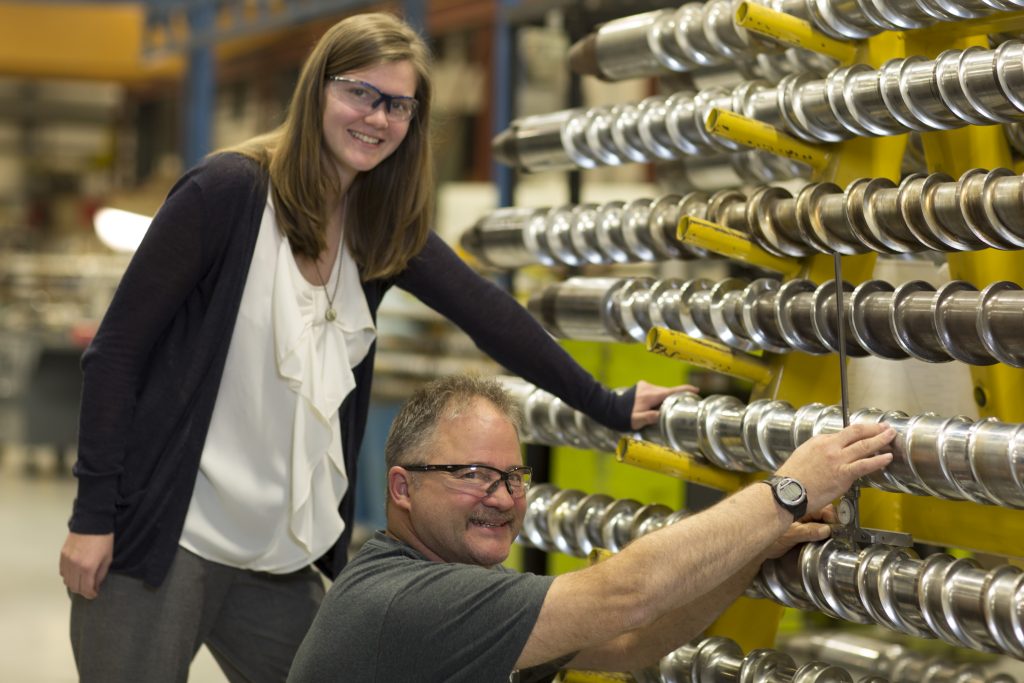
How important are feedscrews and barrels to profitability? When you consider product quality, target outputs and overall process performance, the answer is VERY important.
Read More >
As the healthcare segment continues to grow worldwide, it is vital that equipment meet or exceed specific criteria to support customer success.
Read More >
As we seek to help customers improve outputs and operating efficiency, we look at every extruder component. Two components of paramount importance are the extruder drive and motor. If your extruder is running on an outdated DC drive and motor, you may want to consider the benefits of an AC package to improve your bottom line. The environmental benefits of AC drives and motors combined with production cost savings create a win-win. For some processes, the savings can be so substantial that the initial investment can be returned within a few years.   The power savings and superior efficiency of AC technology are widely proven. This is especially true in the European marketplace, which has led the industry in adopting and developing power-saving solutions. A trial at Davis-Standard’s Technical Center showed AC systems use 5 to 15 percent less power than a DC system. Davis-Standard’s AC motor conversion packages are well suited to most extrusion processes and have low-cost, three-phase AC induction technology. Minimal maintenance, improved accessibility, and greater durability for varied application loads all contribute to production efficiency. If you have aging equipment and are experiencing less than optimal production rates, let us know if we can help you. Installing an AC package may be a viable option before a major breakdown occurs. Several U.S. states offer rebates to manufacturers that install green equipment. Check your local regulations to see if you’re eligible. For more information or to inquire about making the switch to AC drive and motor technology, please contact marketing@davis-standard.com. Cheers, D-S Connect Blog Team
Read More >
We’re happy you’re here! Connecting with you, our customers, is our mission. What better way than posting valuable insights and information focused on equipment health, improved processing, new trends, technological advances and more. You’ll hear from various team members on a range of subjects related to extrusion and converting applications. We also encourage you to contact us directly at marketing@davis-standard.com if there is a specific topic you’d like us to address. We hope you’ll visit often and that connecting via this blog will be beneficial to your manufacturing operation. Here’s to maximum productivity and industry excellence! Cheers, The D-S Connect Blog Team
Read More >

The Feedscrew and Barrel Factor


How important are feedscrews and barrels to profitability? When you consider product quality, target outputs and overall process performance, the answer is VERY important. Ensuring you get the most out of your investment involves understanding the causes of wear and selecting the right barrel and feedscrew base metal and surface constructions.

Causes of wear

Common Causes of Adhesive Wear (metal-to-metal contact):

  • Straightness of barrel and screw
  • Alignment of drive, barrel, feedsection, and feedscrew
  • Screw design
  • Lack of uniformity of barrel heating
  • Screw surface treatment and barrel liner finish being wrongly matched
  • Improper support of the extruder barrel (common with extended L/D ratios)
  • Unsupported dies at the end of the barrel
  • Excessive head pressure

Common Causes of Abrasive Wear:

  • Processing polymers with fillers such as talc, calcium chloride, glass fibers, barium ferrite and titanium oxide
  • Processing silicones

Common Causes of Corrosive Wear (material attacking the surface metals)

  • Processing of corrosive polymers such as some PVC’s, corrosive flame-retardants and fluorocarbons

Preventing premature wear

Make sure screw and barrel material of construction are matched and that one is not trying to induce premature wear in the other.

Only use extrusion barrels and screws with the right base metals and surface hardness for the abrasive and/or corrosive nature of your application. Davis-Standard offers three primary bimetallic grades for barrel treatments: DS1000, DS6000 and DS8000.

  • The DS1000 is iron-based for general purpose wear environments that are non-corrosive.
  • The DS6000 is nickel-based for processing corrosive compounds such as those with flame retardants, fluoropolymers and high-temperature resins.
  • The DS8000 is a nickel-based alloy engineered with a high percentage of tungsten carbide particles suspended within its matric. We recommend this for applications requiring highly corrosive filled or reinforced compounds as well as fluoropolymers and high-temperature resins.

Feedscrew finishes range from high-quality steel for standard applications to Inconel, Hastelloy and Duranickel for highly corrosive applications. Heat treatments such as flame hardening and nitride may also be necessary. To improve wear characteristics on the flight tips, Davis-Standard can inlay a variety of substrates such as stellites and Colmony 83 for improved abrasion resistance. Root surface treatments such as chrome and spray coatings are used for extreme wear conditions.

It’s essential to check for component straightness and machine misalignment on an ongoing basis. You’ll also want to make sure you have the right screw geometry for your application.

For more information regarding feedscrews and barrels, please contact marketing@davis-standard.com.

Cheers,

The D-S Connect Blog team

Equipment Necessities to Keep the Clean Room “Clean”


As a global supplier of medical tubing equipment used in clean room environments, Davis-Standard is vigilant about essential standards required for meticulous processing conditions. As the healthcare segment continues to grow worldwide, it is vital that equipment meet or exceed specific criteria to support customer success. This is one of the primary reasons we offer a clean room environment at our lab in Pawcatuck, Connecticut. Following is a summary of key criteria that must be considered.

Machine Construction

  • Use of stainless steel or rust corrosion-proof materials where coatings are not practical
  • Ensure wipe-down zones are accessible
  • Minimize potential collection areas for dust and debris stagnation
  • Design containment options for possible fluid or residual lubricant leaks
  • Use compact designs to minimize floor space

Machine Surfaces/Treatments

  • Use water-based or epoxy-based paint in areas not constructed with rust or corrosion-resistant materials
  • Polish surfaces and design with smooth, tapered or round edges for effective wipe-down
  • Use stainless steel surfaces to avoid contamination in product “contact” areas

Extrusion Drive Systems/Control Systems

  • Use direct drive systems where applicable
  • Brushless AC motors
  • Water-cooled motors (eliminate turbulent air movement from cooling blowers)
  • Permanent magnet synchronous motors (eliminate the need for gearbox/oils/mechanical drive train; less noise and more energy efficient)
  • Use cooling blower designs that minimize dust generation
  • Route control cabling and wiring for ease of cleaning
  • Consider viewability of control interface monitors from outside cleanroom windows

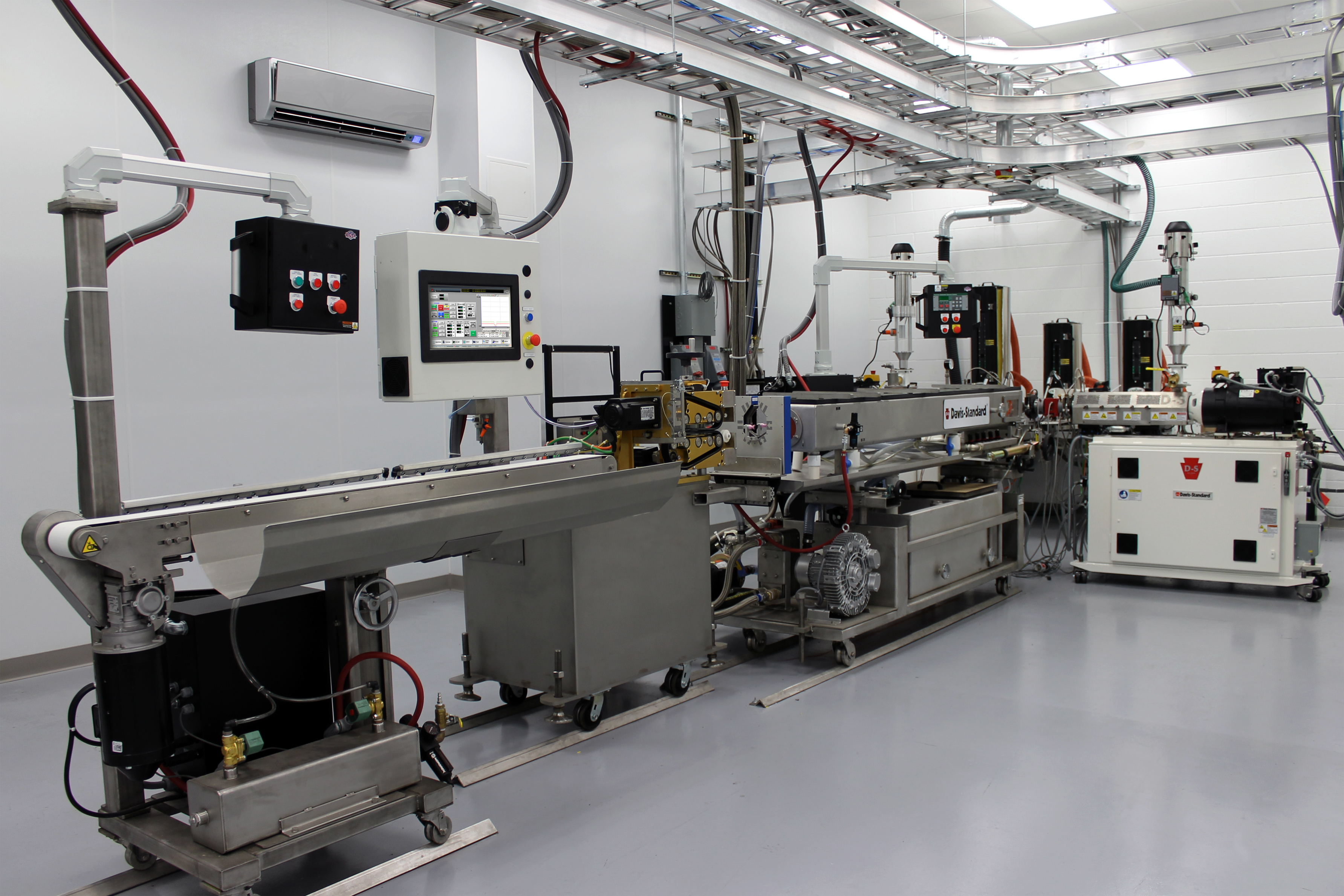
The medical tubing lab at our Technical Center features two MEDD (medical extruder direct drive) extruders and associated downstream equipment in a climate-controlled environment. Customers are able to test new resins, make parts for proof-of-concept, and conduct downstream R&D prior to making large capital equipment investments. The line is extremely versatile and set up to run multiple resins including high-temperature resins such as PEEK and corrosive material like FEP. It also incorporates Davis-Standard’s patented alternate polymer® technology with all components monitored and controlled by the EPIC III® control system.

For more information about Davis-Standard’s clean room engineering practices, please contact marketing@davis-standard.com.

Cheers,

The D-S Connect Blog team

AC Drives and Motors = Improved Bottom Line!

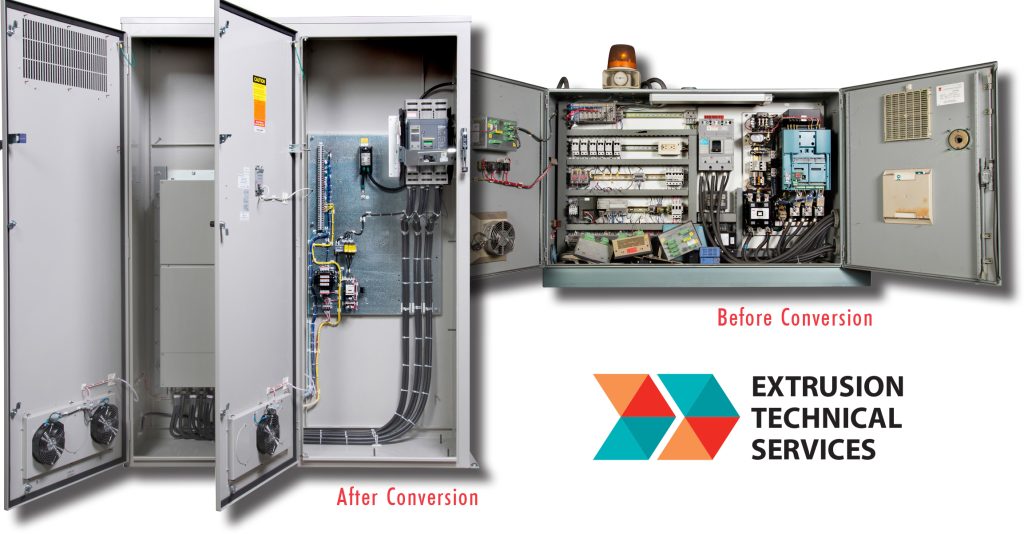
As we seek to help customers improve outputs and operating efficiency, we look at every extruder component. Two components of paramount importance are the extruder drive and motor. If your extruder is running on an outdated DC drive and motor, you may want to consider the benefits of an AC package to improve your bottom line. The environmental benefits of AC drives and motors combined with production cost savings create a win-win. For some processes, the savings can be so substantial that the initial investment can be returned within a few years.


The power savings and superior efficiency of AC technology are widely proven. This is especially true in the European marketplace, which has led the industry in adopting and developing power-saving solutions. A trial at Davis-Standard’s Technical Center showed AC systems use 5 to 15 percent less power than a DC system. Davis-Standard’s AC motor conversion packages are well suited to most extrusion processes and have low-cost, three-phase AC induction technology. Minimal maintenance, improved accessibility, and greater durability for varied application loads all contribute to production efficiency.

If you have aging equipment and are experiencing less than optimal production rates, let us know if we can help you. Installing an AC package may be a viable option before a major breakdown occurs. Several U.S. states offer rebates to manufacturers that install green equipment. Check your local regulations to see if you’re eligible.

For more information or to inquire about making the switch to AC drive and motor technology, please contact marketing@davis-standard.com.

Cheers,
D-S Connect Blog Team

Welcome to the D-S Connect Blog!

We’re happy you’re here! Connecting with you, our customers, is our mission. What better way than posting valuable insights and information focused on equipment health, improved processing, new trends, technological advances and more. You’ll hear from various team members on a range of subjects related to extrusion and converting applications. We also encourage you to contact us directly at marketing@davis-standard.com if there is a specific topic you’d like us to address. We hope you’ll visit often and that connecting via this blog will be beneficial to your manufacturing operation.

Here’s to maximum productivity and industry excellence!

Cheers,
The D-S Connect Blog Team